FILE / Auto
How to Check Tire Pressure the Right Way and When to Do It
Unsure how often to grab a tire pressure gauge or which number to trust? Learn how to use the vehicle placard, what “cold tire pressure” really means, and how a simple monthly tire check can keep your car safer and more efficient.
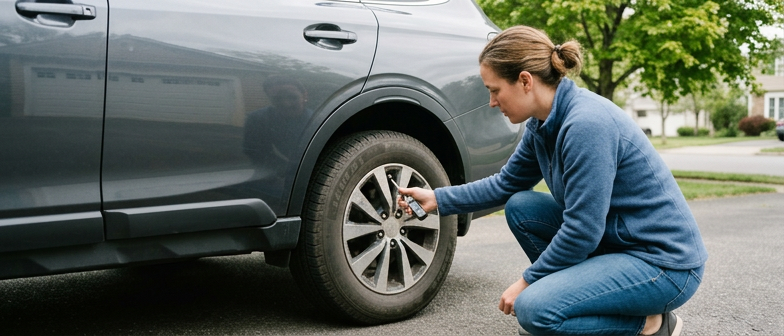
Use the vehicle's cold-pressure specification
Check tire pressure at least monthly and before a long trip. Use a reliable gauge when the tires are cold, and compare each reading with the vehicle's tire-information placard or owner's manual. Front and rear tires may have different recommended pressures. Do not use the tire sidewall's maximum-pressure marking as the routine inflation target.
Correct pressure supports the tire's intended load capacity, handling, and wear. A tire can look normal while being underinflated, so a visual check does not replace a gauge. The tire pressure monitoring system, or TPMS, is another warning tool; it does not replace regular manual checks.
Find the right number before using the pump
On many passenger vehicles, the placard is on the driver's door jamb. The owner's manual explains its location and any pressure requirements for loading or other operating conditions. Use the specifications for your vehicle and fitted tires rather than a general rule such as “all cars need 35 psi.”
The sidewall may show pressure and load limits for the tire. Those markings are not the vehicle manufacturer's everyday recommendation. If the tire size or load specification has been changed from the original equipment, get appropriate guidance from the vehicle manufacturer or a qualified tire professional before assuming the old setting applies.
Check the spare separately if it is an inflatable type. A compact spare may require a very different pressure and have its own speed and distance restrictions. Follow its label and the owner's manual.
What “cold tires” means
A useful routine is to measure before the first drive after the vehicle has been parked for at least three hours. “Cold” refers to the tire not being warmed by driving; it does not mean you must wait for winter weather. Sun exposure and recent driving can affect readings, so measure under consistent conditions where practical.
Driving normally raises tire pressure. Do not release air from a warm tire just because its reading is above the cold specification. Let the tires cool and check again. If a warning appears during a journey, assess the tires and follow the manual rather than delaying action until they cool. A damaged or severely underinflated tire may be unsafe to drive on.
A simple gauge-check routine
- Park safely, apply the parking brake, and read the required pressure for each axle. Confirm whether your gauge and pump use psi, kPa, or another unit.
- Remove one valve cap and keep it somewhere clean.
- Press the gauge squarely onto the valve stem to obtain a reading. A brief hiss can occur; a continuing hiss suggests the gauge is not sealing correctly. Reseat it and measure again.
- Record the reading and compare it with the correct cold specification for that tire.
- If adjustment is needed and the tire is otherwise sound, follow the compressor's instructions. Add air in short amounts and recheck with the gauge. Release excess air only when you can compare it with the applicable specification under the correct conditions.
- Replace the valve cap and repeat for the other tires and any inflatable spare.
Digital, dial, and pencil gauges can all be useful. Choose one with a suitable range and readable markings, protect it from damage, and compare questionable readings with a trusted gauge or service technician. Do not assume a public pump's display is perfectly accurate.
When to check again
Build a monthly check into your calendar. Also check before long trips, towing, or carrying a heavy load, following the vehicle's load instructions. Significant weather changes are another reason to recheck: the pressure can change as air temperature changes.
If one tire repeatedly loses more pressure than the others, arrange an inspection. Adding air can restore the pressure temporarily, but it does not repair a puncture, valve leak, wheel problem, or damaged tire. Do not use repeated topping-up as a substitute for diagnosis.
What to do about a TPMS warning
Stop in a safe place and consult the manual. Inspect the tires and measure their pressure when it is safe to do so. A steady warning can indicate significant underinflation; a flashing warning or another pattern may indicate a system fault. The exact meaning and reset procedure depend on the vehicle.
If a tire is visibly flat, has a bulge or exposed cords, or the vehicle vibrates or handles abnormally, do not continue normal driving. Use the manufacturer's roadside procedure or call for assistance. An air pump cannot make a structurally damaged tire safe.
After correcting pressure, the TPMS may need driving time or a manufacturer-specific procedure to update. Do not reset the system merely to hide a warning. Recheck if it returns, and seek service if the tires are correctly inflated but the warning persists.
References
For the pressure value, load conditions, TPMS behavior, and spare-tire restrictions, use your own vehicle's placard and owner's manual.