FILE / Health
How to Build a Daily Sun Protection Routine That Actually Fits Your Life
Wondering how to protect your skin from everyday sun, not just beach days? This guide shows how to build a simple routine using broad spectrum sunscreen, clothing, shade, and UV Index checks, plus when to reapply so your skin stays safer with minimal hassle.
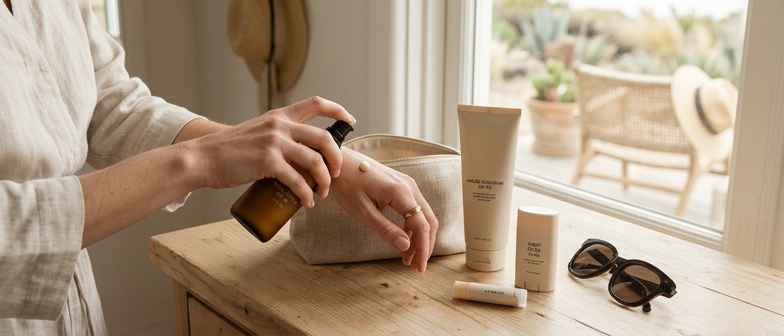
Why a Daily Sun Protection Routine Matters
A daily sun protection routine matters because ultraviolet radiation can damage skin even on cloudy or cool days, and the harm accumulates over time. Health organizations report that regular UV exposure without protection is linked to skin cancer, eye problems such as cataracts, and premature aging. These risks are not limited to the beach; outdoor UV exposure can occur during everyday activities such as commuting or walking a pet. The UV Index describes outdoor conditions; it does not measure the exposure behind a particular window. A consistent routine gives you a clear way to respond to the day’s UV conditions instead of guessing when it might be risky.
For most people, a structured approach helps turn sun safety into an everyday habit. Official guidance often recommends checking the UV Index, choosing shade when levels are high, wearing protective clothing, hats, and sunglasses, and using a broad spectrum sunscreen on uncovered skin. No single measure blocks all exposure, so the goal is layered protection that fits your usual schedule rather than strict rules that are difficult to follow. Make protection part of your outdoor routine. Shade, covering clothing, and sunscreen work together to reduce exposure.
Step-by-Step Daily Sun Protection Routine
Build sun protection into your morning routine. Before getting dressed, apply a broad spectrum sunscreen with at least SPF 30 to all exposed skin, including face, ears, neck, tops of hands, and any bald areas, as suggested by major dermatology and cancer organizations. Use enough product to form an even layer and give it about 15 minutes to absorb before going outside. Then choose clothing that covers well, such as long sleeves, long trousers or skirts, and a wide-brimmed hat if you expect to be outdoors. Checking the day’s UV index on a trusted weather or public health site helps you judge how strict you need to be, because higher values mean skin can burn more quickly.
During your commute and usual daytime activities, combine shade, clothing, and sunscreen according to how long you spend outside. Car windows can let through some UVA radiation, so sunscreen on the face, neck, and arms is useful on longer drives. When walking or waiting for transport around midday, look for shade under trees or building overhangs and keep a hat and covering clothing on. If you sweat heavily, gently blot the skin and reapply sunscreen, because sweating, rubbing from bag straps, and toweling can reduce how well it stays in place.
For longer outdoor activities such as exercise, gardening, sports, or a beach visit, plan reapplication from the start. Public health guidance indicates sunscreen should be reapplied at least every two hours, and more often after swimming, towel drying, or heavy sweating, even when it is labeled water resistant. Before going out, check the current UV index, pack a hat, UV-protective sunglasses, a light but tightly woven long-sleeve layer, and enough sunscreen for repeated use. Notice where shade is available so you can take breaks. This routine offers a general structure that people can adapt to different seasons while still following advice from health professionals for individual skin needs.
Choosing and Using Sunscreen Effectively
Health agencies commonly advise using a broad-spectrum sunscreen with an SPF of at least 30 for everyday protection. Broad-spectrum products are tested to help cover both UVA and UVB, while the SPF number mainly reflects protection against UVB, which is closely linked to sunburn. The American Academy of Dermatology recommends broad-spectrum, water-resistant SPF 30 or higher. A higher SPF is not a reason to stay in the sun longer or skip reapplication. No product blocks all ultraviolet radiation, so sunscreen is meant to work together with shade, protective clothing, hats, and sunglasses.
Texture and formulation mainly influence comfort and how consistently a product is used. Lotions and creams can suit dry skin and large body areas, while gels or sticks may be preferred for oilier or acne-prone skin, or for smaller areas such as the nose, ears, and around the eyes. Water-resistant options are designed to remain more stable during swimming or heavy sweating for the labeled period, often 40 or 80 minutes, but they still need to be reapplied. Many people keep one comfortable broad-spectrum SPF 30 or higher product for daily use and a more water-resistant choice for days with frequent water contact or intense exercise.
How sunscreen is applied strongly affects its protective benefit. A practical guide is to use about one ounce, roughly a shot-glass amount, to cover the skin not covered by clothing on many adults; larger bodies may need more. Use enough to cover each exposed area thoroughly. Applying it around fifteen minutes before going outside allows a more uniform film to form. While in the sun, reapplying at least every two hours is generally advised, and more often after swimming, towel-drying, or heavy sweating, even with water-resistant formulas. Keeping sunscreen near your door or in a bag and pairing it with shade and protective clothing can make regular use easier.
Q&A
-
What is a quick daily routine for sun protection?
Each morning, check the UV Index and put broad spectrum SPF 30 on face, ears, neck, and hands; add sunglasses and a hat if you will be outdoors for more than a few minutes. -
Why choose a broad spectrum product instead of any SPF?
Broad spectrum sunscreen is designed to help block both UVA and UVB, while the SPF number mainly reflects UVB, so it offers more complete daily coverage. -
How often should sunscreen be reapplied?
Reapply about every two hours when in the sun and again after swimming, sweating, or towel-drying, because the protective layer thins with time and activity. -
How should the UV Index affect outdoor plans?
When the UV Index is 3 or higher, try to avoid midday sun, seek shade, wear covering clothing, and use sunscreen, since skin can burn and be damaged more quickly. -
Can clothing replace part of my sunscreen coverage?
Clothing is a key part of a sun protection routine: tightly woven long sleeves, pants, a wide-brimmed hat, and UV-blocking sunglasses add coverage and work best when combined with sunscreen.