FILE / Auto
How to Build a Car Maintenance Schedule from Your Owner’s Manual
Build a maintenance plan from your car’s manual, mileage, service history, and driving conditions. Use the included template to track oil service where applicable, tires, brakes, fluids, and model-specific checks.
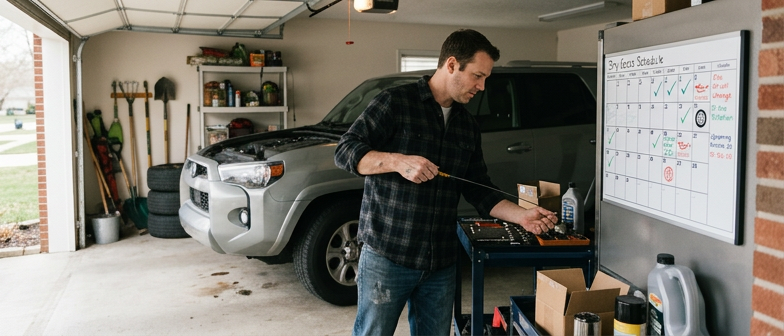
Why Your Car Needs a Personal Maintenance Schedule
A personal maintenance schedule turns scattered tasks into a clear plan tailored to your vehicle and how you drive. Generic advice from friends, shops, or online lists cannot account for your car’s model year, mileage, or repair history, and it may differ from the guidance in the owner manual and factory maintenance guide. Those official documents explain what to do by time, distance, or specific conditions, and they are written for the design of your engine, brakes, tires, and electronics.
To build your own plan, start by gathering the owner manual, any factory service booklet, and your service history so you know what has already been done and what may be overdue. Then map out time based inspections, mileage based services linked to odometer readings, and condition based checks triggered by symptoms or warning lights, always following whichever limit the manufacturer states comes first.
Gathering the Information for Your Schedule
Start by finding the official documents for your vehicle, especially the owner manual and any separate maintenance guide. These explain how the car is meant to be serviced and usually include charts showing what needs attention over time. Confirm the manual matches your exact model year and engine or powertrain, because recommendations can change between versions. If you do not have a printed copy, use the manufacturer’s website or reputable automotive organizations to locate the correct digital manual.
Next, write down the core details about your car so you can match them to the manufacturer’s guidance. Note the full model name, model year, current mileage on the odometer, and roughly when you started using the vehicle. Collect whatever service history is available, including invoices, shop receipts, and inspection reports, and record the dates and mileage for each visit. This overview shows what has been done, which items might be overdue, and where you may need a professional opinion.
Finally, consider how and where the car is driven, because many manuals distinguish between normal use and more demanding conditions. Frequent short trips, stop-and-go traffic, extreme temperatures, towing, and heavy loads are often treated as severe use. Compare your actual habits with the descriptions in the manual and choose the category that fits best, so your maintenance schedule follows the recommendations intended for your real driving pattern.
| Item to Gather | Why It Matters | Where to Find It |
|---|---|---|
| Owner manual | Defines factory maintenance rules | Glovebox or maker website |
| Maintenance guide | Shows time and mileage charts | Printed booklet or online PDF |
| Model year and powertrain | Matches the correct service table | Vehicle documents and manufacturer VIN lookup |
| Current mileage | Aligns tasks with odometer use | Instrument cluster display |
| Service history records | Reveals completed and overdue work | Shop receipts or digital logs |
| Driving conditions notes | Chooses normal or severe schedule | Your typical routes and habits |
Understanding Time, Mileage, and Condition-Based Service
Manufacturer maintenance schedules usually rely on time and mileage. Time-based service uses calendar intervals to keep fluids and parts from aging when the car is driven little, while mileage-based service uses distance to plan work that depends on wear as you add miles. These limits are listed together in the maintenance section of the owner manual for your specific model.
Some vehicles use service reminders or monitoring systems that account for operating conditions. Follow the manufacturer’s instructions for these systems, including any stated maximum time or mileage limit. Unusual noises, changes in handling, leaks, and warning lights need separate attention; do not wait for the next scheduled appointment to investigate them. If a warning indicates an urgent problem, stop safely and follow the owner’s manual before continuing to drive.
Building a Maintenance Plan from the Owner Manual
Begin with the documents specific to your car, especially the owner manual, maintenance guide, and past service records. In the maintenance schedule or service interval sections, find the chart that matches your model year, engine or motor type, and drivetrain. Manufacturers often separate gasoline, diesel, and electric vehicles, so confirm you are using the correct table. Electric cars will not list engine oil changes but may include guidance on high‑voltage components. Mark the recurring items that involve fluids, filters, brakes, tires, and general inspections so the main tasks stand out.
Then align the manufacturer chart with your current mileage and the date the car first went into service. Locate the entries closest to your odometer reading and time in use, and note which items are due by distance, by time, or after an inspection. When the manual lists both time and mileage limits, plan around whichever comes first, because this is how most maintenance obligations are defined. If your driving fits a severe or special‑use description, such as frequent short trips, extreme climate, or heavy loads, follow that schedule instead of the normal one.
Finally, turn the chart into a simple written Car Maintenance Schedule. Create a page or digital note with space for the target date, mileage, and description of each upcoming visit, and mark whether it is time‑based, mileage‑based, or condition‑based. Include recurring items like Oil Changes for combustion engines, Tire Rotation when recommended, Brake Inspection intervals, and key Fluid Checks listed in the manual. Leave room to record warning lights, unusual noises, or extra inspections, and note when and where each service is completed so you can track what has been done and spot any missed items.
Adapting for Driving Conditions and Use Patterns
When planning a car maintenance schedule, first check how the owner manual or maintenance guide defines normal and severe use. Harsher patterns often include frequent short trips where the engine does not fully warm up, repeated stop-and-go traffic, towing or heavy loads, dusty or unpaved roads, long idling, or very hot or very cold climates. Identify which description most closely matches how the vehicle is usually driven and use the service table for that category instead of assuming the normal schedule applies.
Key Systems to Include in Your Schedule
When you build a car maintenance schedule, start by using the owner manual or maintenance guide to list which systems require regular service and which are only inspected. Most guides group items such as engine, tires and wheels, brakes, fluids, and electrical or electronic features. Each task is usually tied to time, mileage, or operating conditions, with a note to follow whichever limit comes first. Record the applicable time, mileage, or inspection requirement for each item. Where both a time and distance limit apply, do not wait for both to be reached.
Engine oil service is a central part of most plans for gasoline and diesel vehicles, and the exact interval depends on the engine, model year, and approved oil type. Rather than using a generic rule, copy the specific instructions, including any oil life monitor messages and what they indicate. Also note that battery electric vehicles do not use engine oil, so their schedules focus on items such as cooling systems, drive units, and high voltage components, which should be handled according to the manufacturer’s safety procedures and not treated like traditional oil changes.
Tires deserve their own section, because rotation patterns and inspection needs depend on tire design and drive system. The guide may change the rotation pattern for directional tires, staggered sizes, or full time all wheel drive and may set mileage or condition based intervals. Your plan can list when to check for uneven wear, damage, or embedded objects and provide space to log visits to a tire shop, while leaving technical steps to professional instructions.
Brakes and fluids should appear both in the recurring checklist and in notes about warning lights. Manuals often describe brake inspections as regular services, with pads and brake fluid checked together by time, mileage, or in response to noises, vibrations, or dashboard alerts. Your schedule can also state which fluids to observe for level and appearance, such as coolant, washer fluid, and power steering or brake fluid where used, and remind readers not to open hot systems or work on braking or high voltage parts. Include a place to record the date, mileage, and notes for each visit so future maintenance can be compared with the plan and reviewed by technicians.
A Maintenance Schedule Template You Can Fill In
Copy the applicable requirements from the manual for your exact vehicle. Leave a field blank if the manufacturer does not specify that type of interval. Base the next due date and mileage on the manufacturer’s rules and your recorded service history; do not assume every item resets at every service visit.
| Service or Check | Manual Page or Source | Time Limit, If Specified | Mileage Limit, If Specified | Last Completed: Date and Mileage | Next Due or Inspection Rule |
|---|---|---|---|---|---|
| Engine oil and filter, if applicable | Fill from your manual | Fill from your manual | Fill from your manual | Enter your record | Enter the applicable limit |
| Tire inspection and rotation, if permitted | Fill from your manual | Fill from your manual | Fill from your manual | Enter your record | Note tire configuration |
| Brake inspection | Fill from your manual | Fill from your manual | Fill from your manual | Enter your record | Follow the inspection rule |
| Cabin and engine air filters, if fitted | Fill from your manual | Fill from your manual | Fill from your manual | Enter your record | Note any condition-based rule |
| Fluids and cooling-system checks | Fill from your manual | Fill from your manual | Fill from your manual | Enter your record | Separate observation from replacement |
| Other model-specific service | Fill from your manual | Fill from your manual | Fill from your manual | Enter your record | Follow the vehicle-specific requirement |
Keep receipts and update the table after each completed service. If records are missing, ask a qualified service provider to help establish a baseline rather than guessing that a safety-related item has already been checked.
Q&A
-
How do I use the owner manual to plan maintenance?
Open the maintenance section, find the chart for your model and engine, then record the time, mileage, or inspection rule that applies to each item. Where the manufacturer specifies both time and mileage, follow whichever limit comes first. -
How should I schedule oil changes without generic rules?
Use the oil service table for your engine, note the stated months and distance, and line up visits with those limits and the way you actually drive. -
How can I combine tire rotation with brake checks?
If your tire configuration permits rotation, use the manual’s rotation schedule. Ask whether the shop can check the brakes during the same visit, while keeping any separate brake-inspection requirements. -
Where do fluid checks and warning lights fit in?
Include only the owner-safe checks listed in the manual. Follow the instructions for each warning light; urgent brake, oil-pressure, or overheating warnings can require stopping safely rather than driving to a later appointment. -
How does an electric car schedule differ?
Battery electric cars skip engine oil, so use the maker’s schedule for items such as brakes, cabin filters, coolant, and high-voltage safety inspections.